 en
en  русский
 한국어
한국어 get a free quote

Content
- 1 Brass Snap Buttons Are One of the Most Reliable Fasteners in Garment and Textile Manufacturing
- 2 What a Brass Snap Button Is Made Of and How It Works
- 3 Standard Sizes and Specifications of Brass Snap Buttons
- 4 Surface Finishes Available for Brass Snap Buttons
- 5 How to Attach a Brass Snap Button Correctly
- 6 Brass Snap Buttons vs Other Fastener Materials
- 7 Key Applications Where Brass Snap Buttons Are the Industry Standard
- 8 What to Look for When Sourcing Brass Snap Buttons
- 9 Caring for Brass Snap Buttons to Extend Their Life
Brass Snap Buttons Are One of the Most Reliable Fasteners in Garment and Textile Manufacturing
Brass snap buttons outperform most other fastener materials in durability, corrosion resistance, and aesthetic finish. Made from a copper-zinc alloy (typically 70% copper, 30% zinc), brass snap buttons can withstand thousands of open-and-close cycles without deforming or losing their grip — making them the preferred choice for denim jeans, leather jackets, workwear, baby clothing, bags, and upholstery.
Unlike plastic snaps, which become brittle under UV exposure or cold temperatures, and unlike cheaper alloy snaps that corrode quickly, brass snap buttons maintain their structural integrity and surface appearance over the long term. If you're choosing a fastener for a product that needs to last, brass is rarely the wrong answer.
What a Brass Snap Button Is Made Of and How It Works
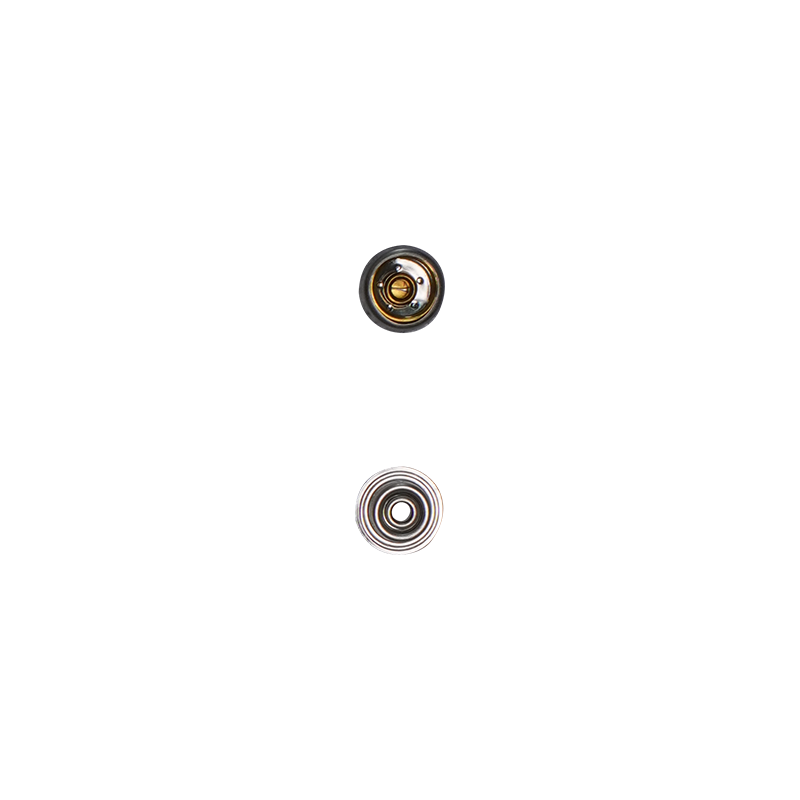
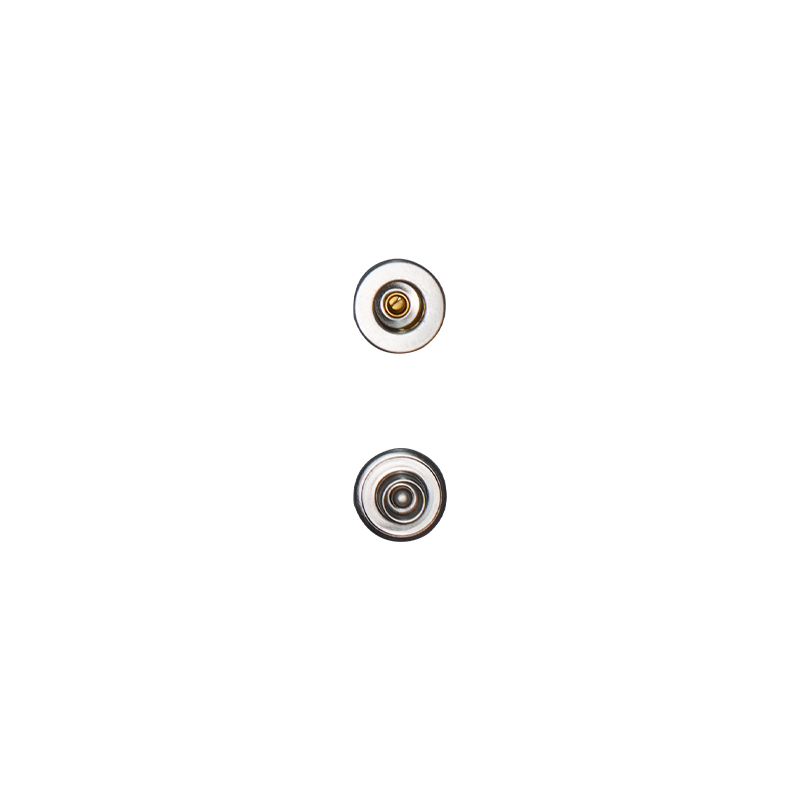
A snap button — also called a press stud, popper, or snap fastener — consists of four interlocking components that work together to create a secure, tool-free closure.
The Four-Part Anatomy of a Snap Button
- Cap (Top): The visible decorative face on the right side of the fabric. Usually polished, brushed, or coated in a specific finish.
- Socket (Female): The ring-shaped component on the back of the front fabric panel that receives the stud.
- Stud (Male): The rounded post that clicks into the socket to fasten the snap.
- Post (Back): The backing plate on the underside that anchors the cap or stud to the fabric using a prong or rivet mechanism.
When pressure is applied, the stud's rounded head compresses slightly and snaps into the socket's inner ring. The spring tension created by the brass material holds the connection firmly until deliberate force is applied to separate them. A well-manufactured brass snap button typically requires 2–5 kg of force to open, which is firm enough to stay closed during normal use but easy enough for children and elderly users to manage.
Why Brass — Not Steel or Aluminium?
Brass offers a unique combination of properties that other metals don't replicate as well in this application:
- Malleability: Brass can be stamped and drawn into precise shapes without cracking, which is essential for the complex geometry of snap components.
- Corrosion resistance: Unlike steel, brass doesn't rust. It can oxidise slowly to form a natural patina, but this doesn't compromise its function.
- Consistent spring tension: The elasticity of brass allows the socket to flex and return to its original shape repeatedly without fatigue cracking.
- Electroplating compatibility: Brass accepts a wide range of surface finishes — gold, nickel, antique bronze, gunmetal — making it versatile for fashion and industrial applications alike.
Standard Sizes and Specifications of Brass Snap Buttons
Brass snap buttons are manufactured in a range of diameters to suit different applications. Choosing the wrong size is one of the most common and easily avoidable mistakes in garment production.
| Size (Ligne) | Diameter (mm) | Common Applications | Fabric Weight Suitability |
|---|---|---|---|
| Line 14 (14L) | ~9 mm | Baby clothing, lingerie, light blouses | Lightweight (jersey, chiffon) |
| Line 16 (16L) | ~10 mm | Shirts, dresses, casual wear | Light to medium (cotton, linen) |
| Line 20 (20L) | ~12.5 mm | Jackets, bags, children's wear | Medium (canvas, denim) |
| Line 24 (24L) | ~15 mm | Denim jeans, outerwear, workwear | Medium to heavy (denim, twill) |
| Line 30 (30L) | ~19 mm | Leather goods, heavy bags, upholstery | Heavy (leather, thick canvas) |
The "ligne" (L) measurement system originates from French watchmaking and is still the global standard for snap button sizing. One ligne equals approximately 0.635 mm, so a 20L snap has a cap diameter of roughly 12.7 mm. When in doubt, always measure the cap diameter rather than relying on marketing descriptions.
Surface Finishes Available for Brass Snap Buttons
The base brass material can be finished in dozens of ways to match a brand's aesthetic or meet performance requirements. The most commercially common finishes include:
- Shiny Gold: Electroplated with a thin layer of gold-toned alloy. Popular for fashion accessories and premium garments. Requires careful handling to avoid scratching.
- Antique Brass / Antique Gold: A chemically aged finish that produces a warm, vintage appearance. Widely used in leather goods, boots, and heritage-style clothing.
- Brushed Nickel / Silver: A matte, cool-toned finish. Common in contemporary outerwear and technical clothing.
- Gunmetal / Black Oxide: A dark, industrial-look finish produced by chemical blackening. Popular for military-style apparel, bags, and menswear.
- Natural Brass (Uncoated): Left in its raw state, it develops a natural patina over time. Preferred for artisanal and handmade goods where aging is part of the aesthetic.
- Lacquer-Coated: A clear or tinted lacquer applied over any finish to slow oxidation and preserve appearance. Essential for humid or coastal environments.
Electroplated finishes typically range from 0.3 to 1.0 microns in thickness for fashion applications, while industrial-grade coatings can exceed 5 microns for maximum durability. Thicker plating costs more but significantly extends the lifespan of the surface appearance.
How to Attach a Brass Snap Button Correctly
Improper installation is the leading cause of snap button failure — not the snap itself. A correctly set brass snap will outlast most garments; a poorly set one can pull free after just a few uses. The installation method depends on the snap type.
Prong-Type Snap Buttons (No-Sew)
The most widely used method in industrial garment production. The post component has sharp prongs that pierce through the fabric and fold over to clamp the cap in place.
- Mark the placement point on both fabric panels with tailor's chalk
- Use a hole punch or awl to create a clean opening (do not tear — tearing weakens the surrounding fabric)
- Insert the post prongs through the fabric from the back
- Place the cap face-down onto the setting anvil
- Position the setter tool over the post and strike firmly with a hammer or mallet — typically one clean strike is sufficient
- Repeat for the socket/stud pair on the opposite panel
Always use the correct die/anvil set for the snap size. Using an undersized anvil will deform the cap; an oversized one will leave the prongs insufficiently folded, and the snap will pull out under stress.
Sew-On Snap Buttons
Some brass snap buttons — particularly those used in couture or delicate fabrics — have a sewn flange (a flat rim with holes) rather than prongs. These are hand-stitched to the fabric using buttonhole thread, passing through each hole 4–6 times and finishing with a knot and bar tack. This method is slower but causes no fabric penetration stress and is preferred for sheer, embroidered, or beaded materials where a punch hole would be visible or damaging.
Machine-Set Snap Buttons for Industrial Production
In high-volume manufacturing, pneumatic or mechanical press machines set snap buttons at rates of 500–1,500 pieces per hour. These machines apply a precise, calibrated force that hand-setting cannot replicate consistently — resulting in uniform snap tension across a production run. Brands producing more than a few hundred units per style typically find machine setting more cost-effective within one to two production runs.
Brass Snap Buttons vs Other Fastener Materials
Understanding where brass snap buttons excel — and where alternatives might be more appropriate — helps in making informed sourcing decisions.
| Material | Durability | Corrosion Resistance | Finish Options | Cost (Relative) | Best Use Case |
|---|---|---|---|---|---|
| Brass | Very High | Excellent | Wide range | Medium–High | Denim, leather, premium apparel |
| Stainless Steel | Very High | Excellent | Limited | High | Marine, medical, outdoor gear |
| Zinc Alloy (Pot Metal) | Medium | Moderate | Wide range | Low–Medium | Budget fashion, fast fashion |
| Plastic (Nylon/Resin) | Low–Medium | Very Good | Colour options | Very Low | Baby wear, sportswear, rainwear |
| Aluminium | Medium | Good | Limited | Low–Medium | Lightweight outdoor clothing |
Zinc alloy snaps are often sold as "metal snap buttons" without specifying the alloy — a detail worth clarifying with suppliers. Zinc alloy snap buttons typically begin to show corrosion or plating failure within 12–24 months of regular use, while brass equivalents in the same conditions can remain functional for a decade or more.
Key Applications Where Brass Snap Buttons Are the Industry Standard
Certain industries have settled on brass as the default material for snap fasteners due to its proven track record. Understanding these contexts helps buyers and designers make better specification decisions.
Denim and Heavy Workwear
Denim jeans, jackets, and dungarees have used brass snap buttons — particularly rivet-backed tack buttons — since the 1870s. The material withstands the mechanical stress of heavy fabric layers and repeated wear far better than alternatives. Brands like Levi's specify brass hardware as a quality marker across their core denim lines.
Leather Goods and Accessories
Leather wallets, belts, saddlery, holsters, and bags rely on brass snap buttons because the material's natural resistance to moisture-induced oxidation is critical when paired with tanned hides that can themselves be acidic. Antique brass and raw brass finishes also complement natural leather's colour tones aesthetically.
Baby and Children's Clothing
Brass snap buttons — particularly smaller sizes like 14L and 16L — are standard on baby bodysuits, rompers, and sleep suits. They allow quick nappy changes without zips (which can snag or injure) and withstand high-frequency laundering at elevated temperatures. Most baby garment standards in Europe (EN 13209) and the US (ASTM F963) require that snap fasteners pass pull and torque tests that brass consistently meets.
Military and Tactical Gear
Military specifications (MIL-SPEC) for uniform closures, pouch flaps, and equipment covers have historically favoured brass snap buttons for their reliability under extreme conditions. Gunmetal and black oxide finishes are used to reduce reflectivity. The consistent engagement force of brass snaps is also safer in field conditions where fumbling with complex fasteners is not an option.
What to Look for When Sourcing Brass Snap Buttons
Quality varies significantly between manufacturers, and the wrong snap can cost far more in returns and reputation damage than the small difference in unit price. Here are the key factors to evaluate:
- Brass content declaration: Reputable suppliers will specify the alloy composition. C26000 (cartridge brass, 70/30) is the standard for snap fasteners and offers the best balance of springiness and corrosion resistance.
- Engagement force consistency: Request samples and test the snap force across multiple units. Variation of more than ±0.5 kg between samples indicates quality control issues.
- Plating adhesion: Bend the cap slightly and inspect whether the plating flakes. Quality electroplating should flex with the brass rather than separate from it.
- REACH and RoHS compliance: For garments sold in the EU, snap buttons must be tested for restricted substances including nickel release (EN 1811) and lead content. Ask for test certificates.
- Minimum order quantity (MOQ): For small production runs, MOQs of 500–1,000 pieces per size/finish are typical from wholesale suppliers. Specialty retailers can supply smaller quantities but at a higher per-unit cost.
A useful benchmark: high-quality brass snap buttons for garment use typically cost between $0.02 and $0.15 USD per piece at wholesale quantities, depending on size, finish, and complexity. Prices significantly below this range often indicate zinc alloy substitution.
Caring for Brass Snap Buttons to Extend Their Life
Brass is durable, but it does require some basic maintenance — particularly when the snaps are uncoated or used in demanding conditions.
- Avoid prolonged exposure to chlorine: Swimming pool water and bleach-based detergents can accelerate surface tarnishing and degrade plating. Rinse garments promptly after chlorine exposure.
- Clean tarnish naturally: A paste of flour, salt, and white vinegar (applied for 10 minutes, then rinsed) restores the shine to uncoated brass without abrasive damage.
- Do not machine-dry at high heat repeatedly: Repeated high-heat drying cycles can cause the metal to fatigue at the prong fold points over time. Air drying is preferable for garments with multiple snap buttons.
- Fasten snaps before washing: Leaving snaps open during machine washing can cause the socket edge to catch on other fabrics and deform.
- Apply a thin coat of clear wax or microcrystalline wax to uncoated brass snap surfaces every 6–12 months to slow natural oxidation on leather goods and accessories not subject to regular washing.