 en
en  русский
 한국어
한국어 get a free quote

Content
- 1 Why Knowing Zipper Part Names Matters
- 2 Zipper Tape: The Fabric Backbone
- 3 Teeth and Chain: The Elements That Lock
- 4 The Slider: Three Parts in One
- 5 Pull Tab: Your Point of Contact
- 6 Top Stop and Bottom Stop
- 7 Insertion Pin and Retainer Box
- 8 Zipper Gauge: How Size Numbers Work
- 9 Additional Zipper Terms Worth Knowing
- 10 Quick Reference: All Zipper Part Names at a Glance
Why Knowing Zipper Part Names Matters
A zipper is one of the most engineered components in apparel and product manufacturing, yet most people describe it simply as "the thing that zips." That's fine until a zipper fails on a production run, a repair technician needs to order the right replacement, or a fashion designer is writing a tech pack. At that point, vague language costs time and money.
The zipper industry has formal terminology established by ASTM D2050, the standard terminology for zipper components and subassemblies. The guide below covers every standard part name, what the component does, and where it sits in the overall assembly—organized from the outside of the zipper in, and from top to bottom.
Zipper Tape: The Fabric Backbone
The zipper tape is the woven fabric strip running the full length of the zipper on both sides. It's what gets sewn into a garment, bag, or accessory. The teeth or coil are attached along the inner edge of each tape half, and the tape is the primary structural element that holds the entire assembly together.
Standard tape is woven from polyester for dimensional stability and colorfastness. Specialty tape constructions include laminated tape for waterproof zippers, cotton tape for heritage garments, and dyed tape in a full color spectrum to match any material. Tape width is proportional to the zipper's gauge size: a #10 zipper has significantly wider tape than a #3.
The tape also has two named zones: the top extension (the extra length of tape above the top stop) and the bottom extension (the extra tape below the bottom stop or pin/box assembly). These extensions provide the sewing allowance for attaching the zipper cleanly into a seam.
Teeth and Chain: The Elements That Lock
The teeth—also called elements in formal industry terminology—are the interlocking components mounted on both halves of the tape. When engaged by the slider, they mesh together to hold the zipper closed. The full row of teeth on both sides is collectively called the zipper chain.
Teeth are manufactured in three fundamental constructions:
- Coil (nylon monofilament): A continuous spiral sewn or woven onto the tape edge. Lightweight, flexible, and the most common construction in apparel zippers. Explore our nylon zipper chain for apparel and accessory production.
- Molded teeth (Delrin/Vislon): Individual plastic teeth injection-molded directly onto the tape at set intervals. Larger, more visible, and common in outerwear and luggage.
- Metal teeth: Individual brass, aluminum, or nickel elements crimped onto the tape. The heaviest and most premium construction, used in leather goods, denim, and luxury apparel.
Each tooth type requires a slider designed to match—a coil slider will not function correctly on a molded tooth chain, even at the same gauge size.
The Slider: Three Parts in One
The slider is the moving component that joins or separates the zipper teeth. It's what most people point to when they say "the zipper." But the slider is itself a multi-part subassembly, and each of its internal zones has a specific name:
- Crown: The topmost surface of the slider body, often carrying a brand stamp or decorative finish. The crown also contains the bail—a small loop or bar—where the pull tab attaches.
- Body: The main structural housing of the slider, usually metal or molded plastic. The body contains the Y-shaped internal channel that guides teeth together on the closing side and apart on the opening side.
- Throat: The opening at the bottom of the slider body where the two rows of teeth enter the channel. The precise dimensions of the throat determine which chain gauge the slider is compatible with—and why size-matching is non-negotiable.
Sliders are also classified by their locking mechanism: auto-lock sliders grip the chain the moment you release the pull tab; semi-lock sliders hold when tension is applied; non-lock sliders move freely in both directions. For jacket front closures and high-movement applications, auto-lock is standard. Browse our range of nylon zipper sliders in locking and non-locking configurations.
Pull Tab: Your Point of Contact
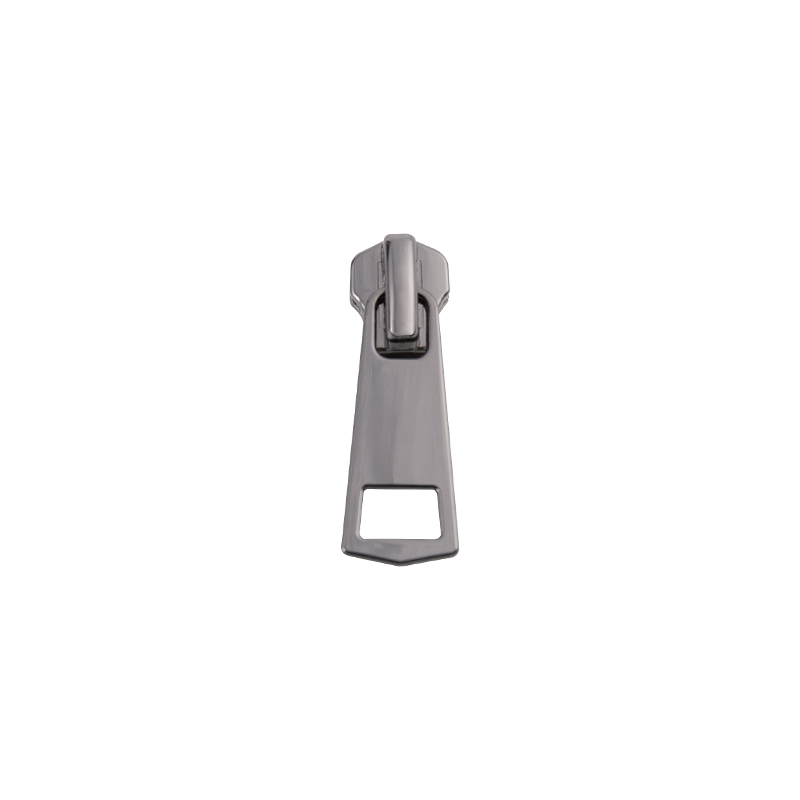
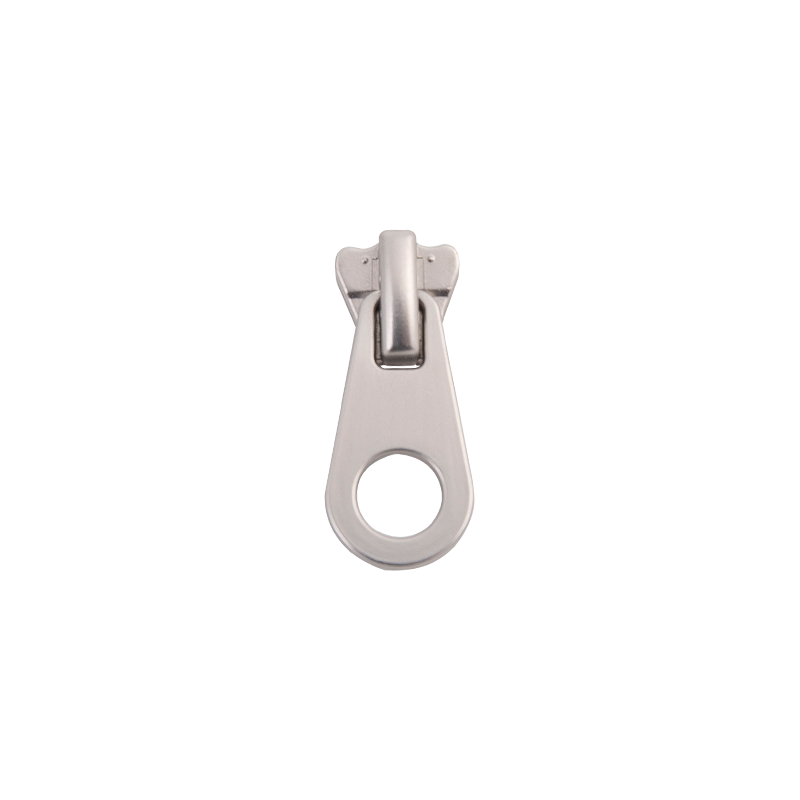
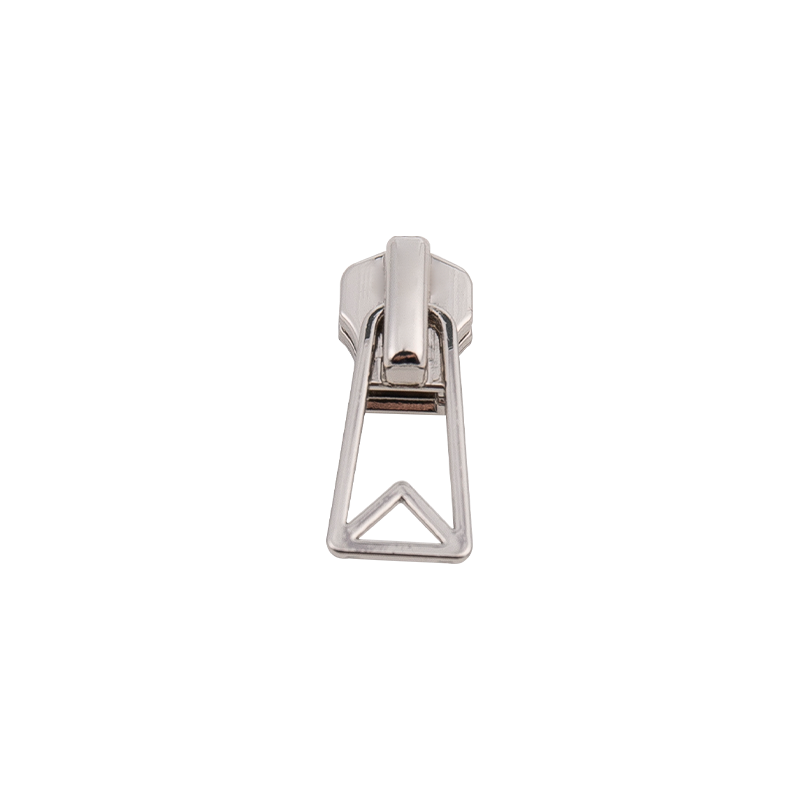
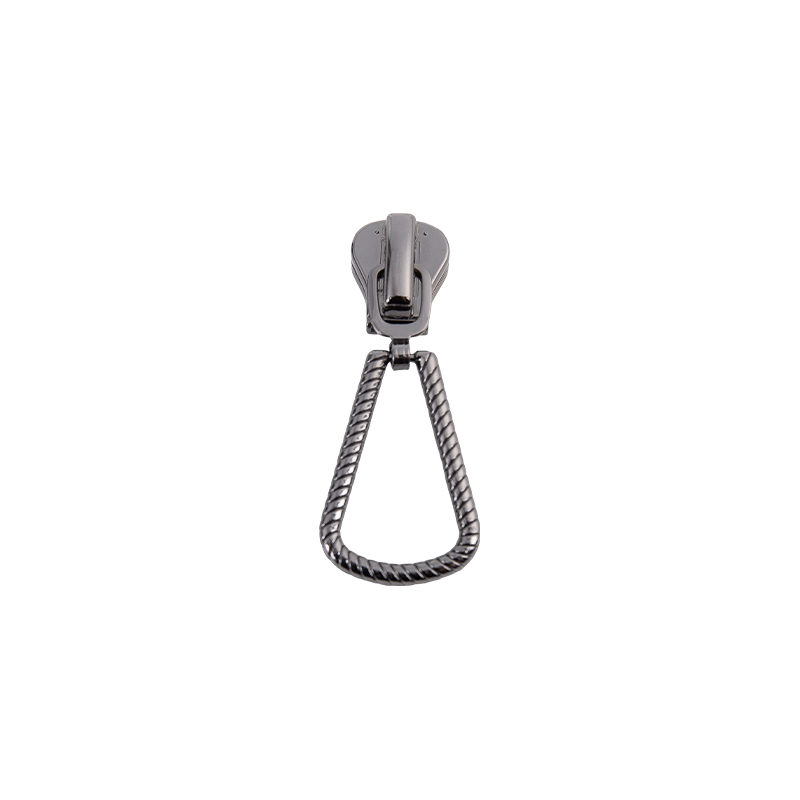
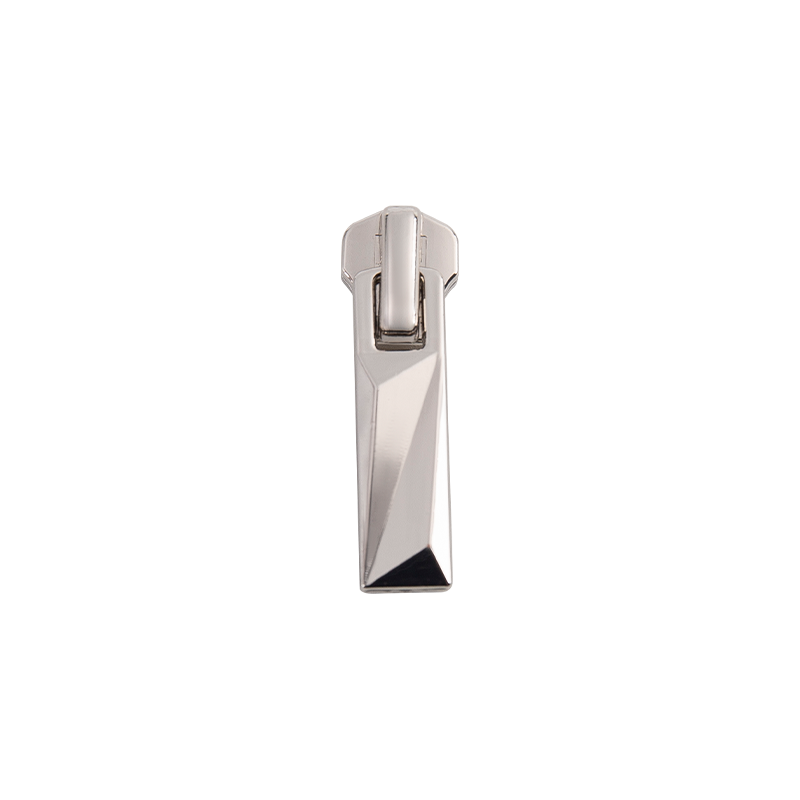
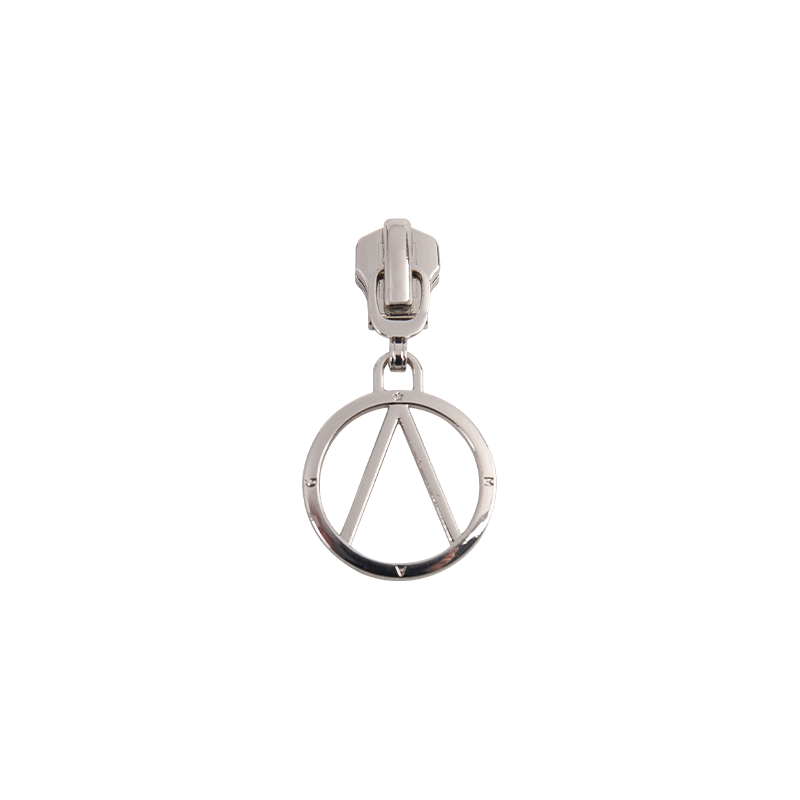
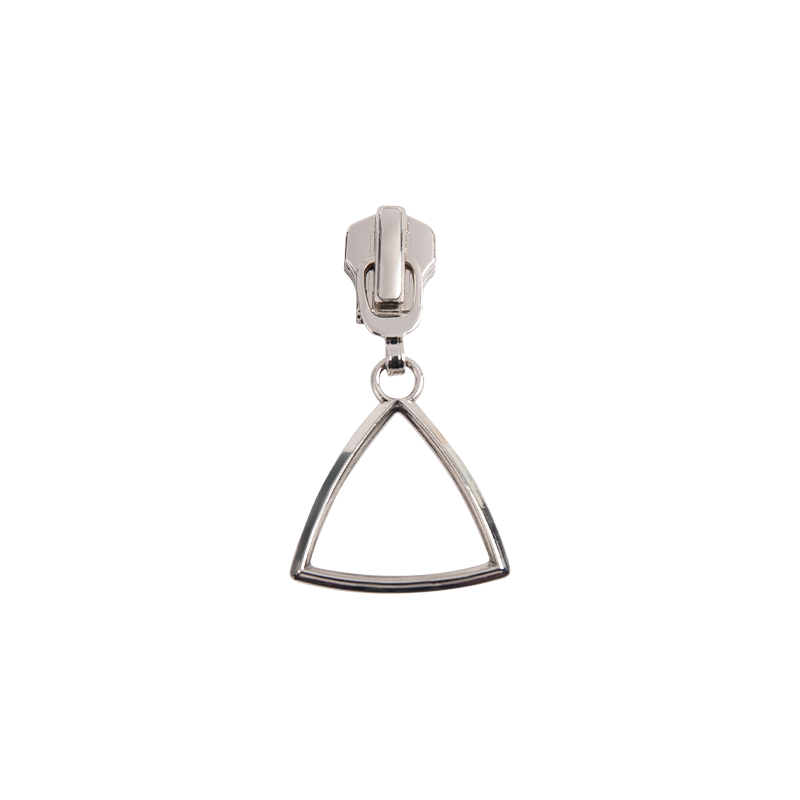
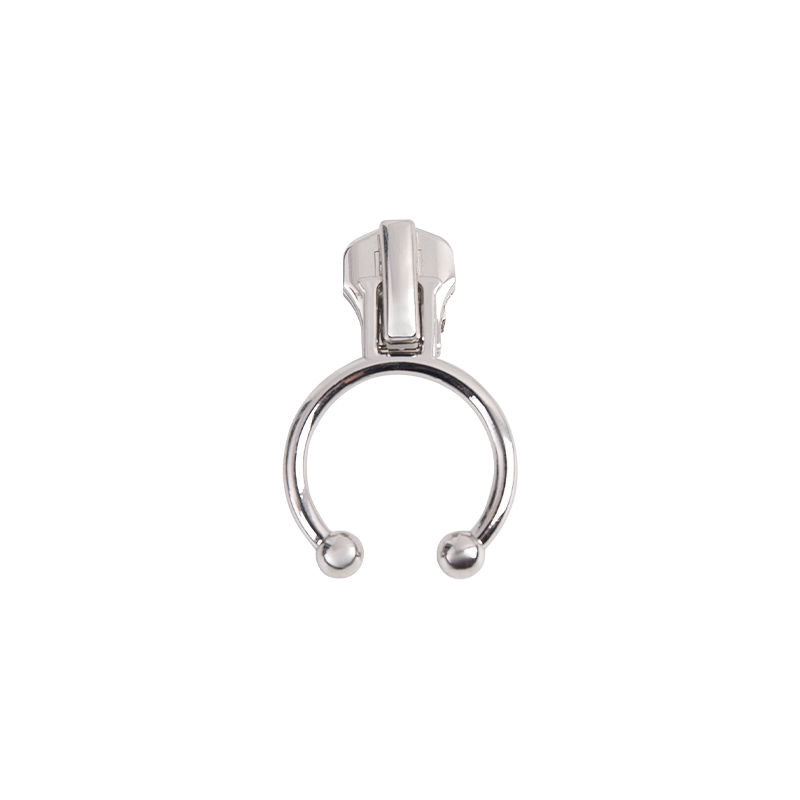
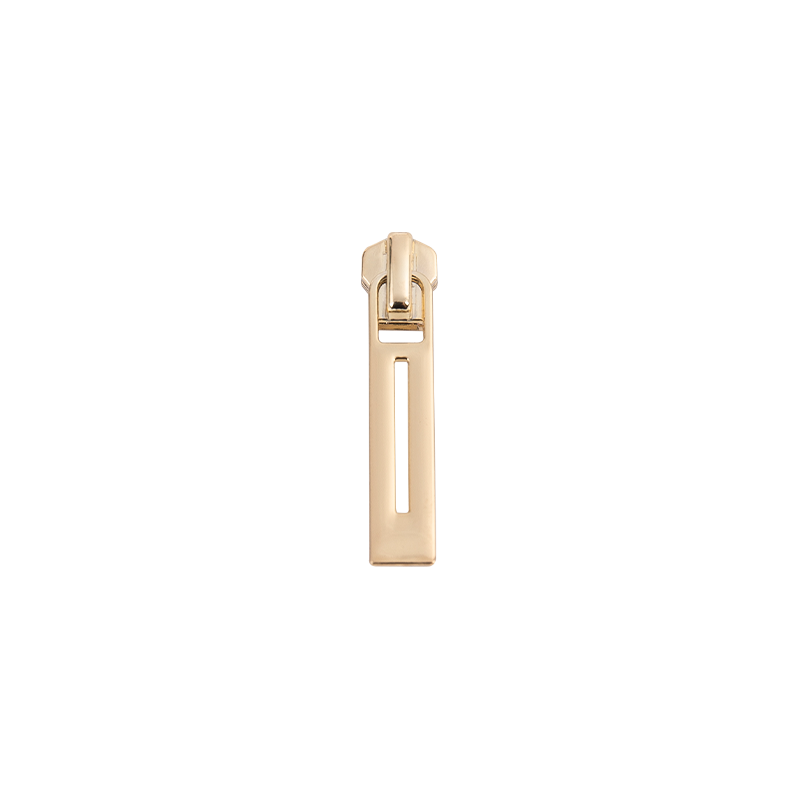
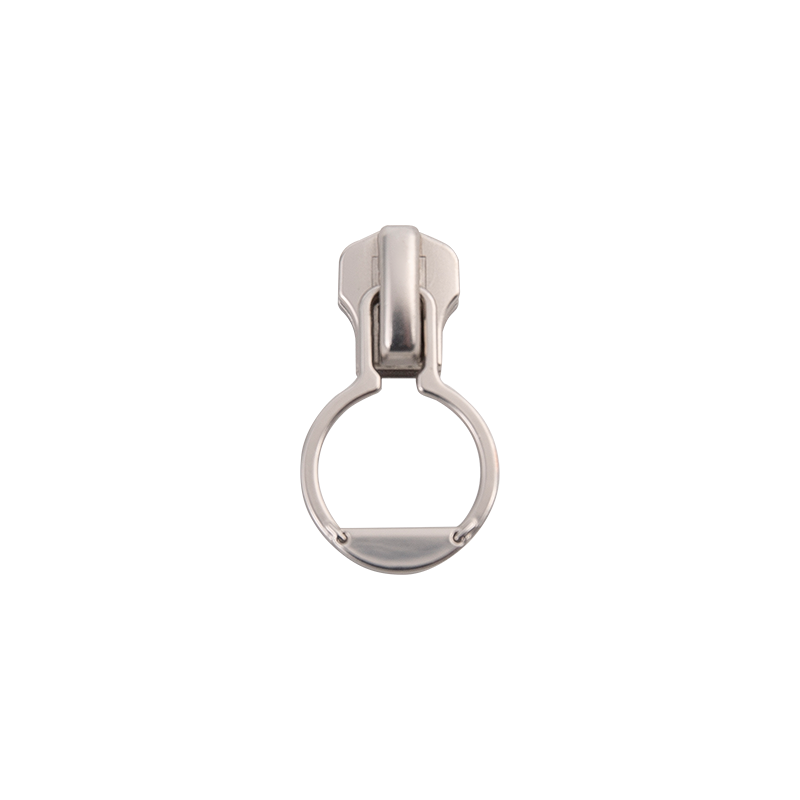
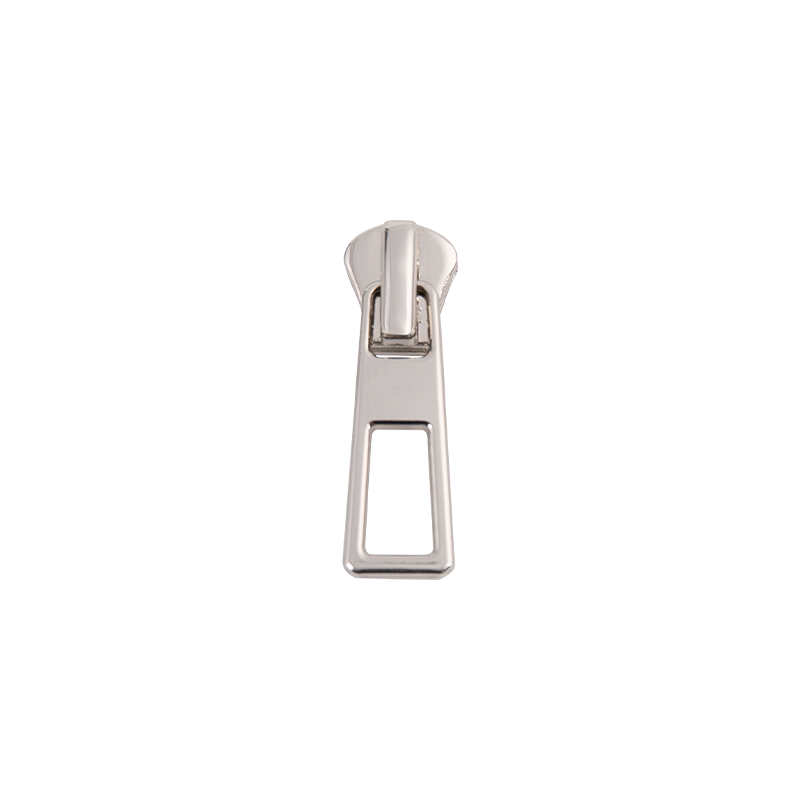
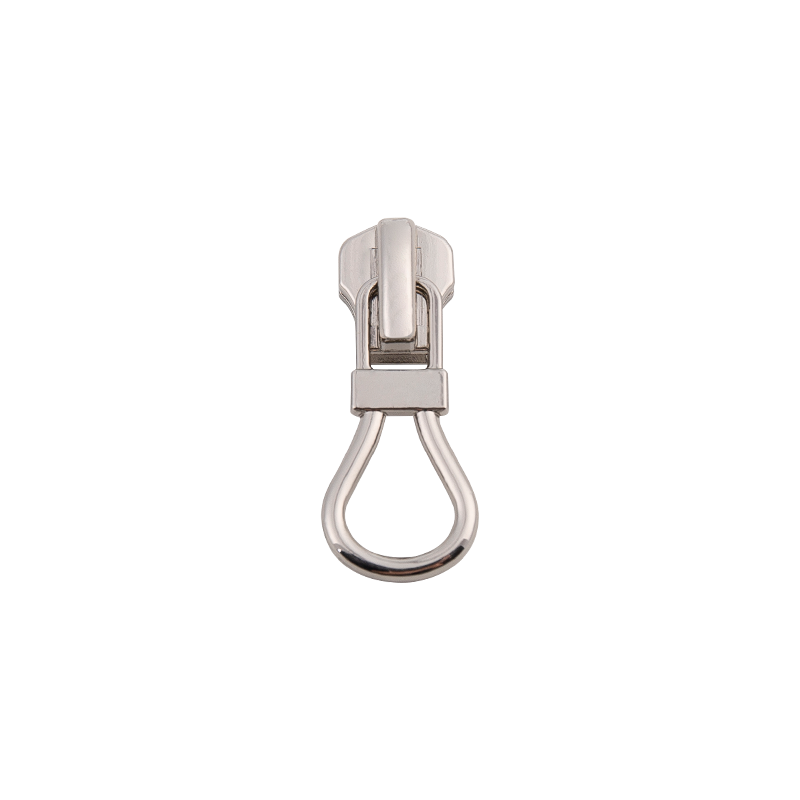
The pull tab (also called the puller or zipper pull) is the component attached to the slider's bail that you grip to operate the zipper. On finished, pre-assembled zippers it comes pre-installed; on continuous zipper chain it must be added separately as part of the slider.
Pull tabs vary widely by form: simple wire rings, flat D-rings, elongated levers, braided cord pulls, or custom-shaped metal pieces. The choice is partly functional—longer tabs give more leverage for gloved operation—and partly aesthetic, since the pull tab is the most visible single component on a closed zipper.
A two-way zipper uses a slider with pull tabs on both sides, or two separate sliders that travel in opposite directions along the same chain. This configuration appears on some jackets, luggage, and outdoor tents where partial opening from either end is needed.
Top Stop and Bottom Stop
Stops are the small metal or molded plastic clamps that prevent the slider from running off the end of the chain. Every zipper has at least two top stops—one crimped onto each tape half at the upper end—that halt the slider when the zipper is fully open.
On non-separating zippers (pocket zippers, pants flies, bag zippers), a single bottom stop is also present at the lower end, permanently joining the two tape halves at the base. This bottom stop is what keeps those zipper styles from fully separating.
On separating zippers (jacket and coat styles), there is no bottom stop. Instead, the bottom of each tape half carries the insertion pin and retainer box, described in the next section. Top stops are replaceable; a broken or missing top stop can be crimped back on with needle-nose pliers and a new stop. Our zipper top and bottom stoppers are available in sizes matched to all standard chain gauges.
Insertion Pin and Retainer Box
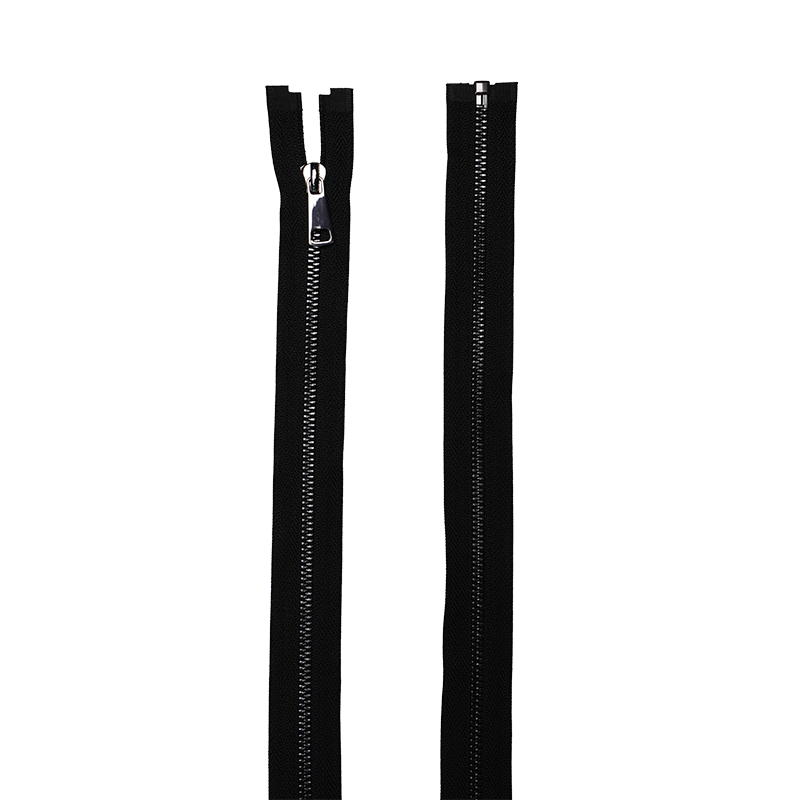
These two components exist only on separating zippers and are the reason jacket zippers can split completely into two halves. The insertion pin (sometimes called the starter pin) is a rigid spike permanently attached to one tape half at the bottom. The retainer box (also called the starter box) is a rectangular housing on the opposite tape half at the bottom.
To use the zipper, the insertion pin slides into the retainer box through the slider's throat. This action aligns both rows of teeth at the base so that the slider can begin joining them from the bottom up. Without a correctly functioning pin and box, a separating zipper simply cannot be engaged.
These components are permanently bonded to the tape and cannot be re-added or individually swapped once damaged. If either breaks, the full zipper requires replacement. Specifying quality nylon zipper pin and box sets in your sourcing prevents this failure point from appearing in finished goods.
Zipper Gauge: How Size Numbers Work
Every zipper carries a gauge number—typically #3, #5, #7, #8, or #10. This number represents the approximate width of the closed zipper teeth in millimeters. A #5 zipper has a closed chain approximately 5 mm wide; a #10 chain is approximately 10 mm wide. Larger gauge numbers mean physically larger, heavier, and generally stronger zippers.
The gauge number appears stamped on the back of every slider. It determines which slider, which chain, and which stop sizes are compatible with one another. Cross-matching sizes—for example, using a #5 slider on a #8 chain—will cause the slider to skip, jam, or fail to engage the teeth entirely.
Common gauge applications in apparel: #3 for lightweight dresses and trousers; #5 for jackets, sportswear, and bags; #8 and #10 for heavy outerwear, luggage, and technical gear.
Additional Zipper Terms Worth Knowing
A few less commonly named parts appear on specific zipper applications:
- Zipper garage: A small fabric pocket sewn at the top of a zipper opening, designed to "park" the slider and pull tab when fully open. Common on outerwear, it prevents the metal slider from scratching the wearer's chin and protects the pull tab from catching on other fabric.
- Continuous chain / open-end chain: Zipper chain sold by the roll without pre-installed sliders or stops. Used in industrial and cut-to-length applications where the installer adds all components manually.
- Invisible zipper: A construction where the teeth face inward toward the garment rather than outward. When properly installed, only the pull tab is visible from the outside. See our finished invisible zippers for apparel and formal wear applications.
- Bail: The small loop or bar on the slider crown to which the pull tab is attached. Technically a sub-component of the slider rather than a standalone zipper part, but frequently referenced when ordering replacement pull tabs.
Quick Reference: All Zipper Part Names at a Glance
Use the table below as a fast-access reference when specifying, ordering, or repairing zipper components.
| Part Name | Alternate Name(s) | Location | Zipper Type |
|---|---|---|---|
| Zipper Tape | — | Full length, both sides | All types |
| Teeth / Elements | Coil, Chain | Inner edge of tape | All types |
| Zipper Chain | — | Both rows of teeth combined | All types |
| Slider | Car, Zip head | Rides on the chain | All types |
| Crown | — | Top surface of slider | All types |
| Body | — | Main housing of slider | All types |
| Throat | — | Bottom opening of slider | All types |
| Bail | — | Loop on slider crown | All types |
| Pull Tab | Puller, Zipper pull | Attached to bail | All types |
| Top Stop | Top stopper | Upper end of each tape half | All types |
| Bottom Stop | Bottom stopper | Lower end of tape | Non-separating only |
| Insertion Pin | Starter pin, Pin | Bottom of one tape half | Separating only |
| Retainer Box | Starter box, Box | Bottom of opposite tape half | Separating only |
| Top Extension | — | Tape above the top stop | All types |
| Bottom Extension | — | Tape below the bottom stop | All types |
| Zipper Garage | — | Fabric pocket at top of opening | Finished garments |
Having the correct part name is the first step to getting the right component. Pair it with the gauge number (from the back of the slider) and the chain type (coil, molded, or metal), and you have everything a supplier needs to match your zipper exactly—whether you're placing a bulk production order or sourcing a single repair part.