 en
en  русский
 한국어
한국어 get a free quote

Content
- 1 The Anatomy of a Zipper: An Overview
- 2 Zipper Teeth (Elements): The Core of the Closure
- 3 Zipper Tape: The Foundation
- 4 The Slider: How a Zipper Opens and Closes
- 5 The Pull Tab (Puller): Function Meets Design
- 6 Top Stop and Bottom Stop
- 7 Insertion Pin and Retainer Box (Separating Zippers Only)
- 8 How to Choose the Right Zipper Parts for Your Product
The Anatomy of a Zipper: An Overview
A zipper looks deceptively simple from the outside. Pull the tab up, the closure seals. Pull it down, it opens. But behind that smooth motion is a precisely engineered assembly of eight distinct components, each performing a specific mechanical function. When any one part is poorly made or mismatched, the entire zipper fails.
Understanding zipper anatomy matters whether you are a garment designer specifying components for a new product line, a manufacturer sourcing parts at volume, or a repair professional diagnosing a faulty closure. The eight core parts of a zipper are: teeth (elements), tape, slider, pull tab, top stop, bottom stop, insertion pin, and retainer box — with the last two appearing only on separating zippers.
This guide covers each component in detail: what it does, what it is made from, and what to look for when selecting it for different product applications.
Zipper Teeth (Elements): The Core of the Closure
Teeth — also called elements — are the interlocking parts that run along both sides of the zipper tape. When the slider passes over them, it either locks them together or separates them. The quality, material, and profile of the teeth determine the zipper's strength, smoothness, and appropriate use case.
There are three main types of zipper teeth, each with distinct manufacturing methods and performance characteristics:
| Teeth Type | Material | Key Properties | Common Applications |
|---|---|---|---|
| Coil (Nylon) | Continuous nylon monofilament, sewn to tape | Flexible, lightweight, smooth operation, corrosion-resistant | Apparel, luggage, upholstery, sleeping bags |
| Molded Plastic | Injection-molded polyacetal or nylon | Lightweight, wide color range, corrosion-resistant, moderate strength | Sportswear, bags, children's clothing, outerwear |
| Metal | Brass, aluminum, or nickel-plated alloy, stamped and crimped to tape | Maximum strength, premium appearance, heavier weight | Denim jeans, boots, leather goods, military gear, luxury accessories |
Teeth size is standardized by a number (e.g., #3, #5, #8, #10) that refers to the approximate width of the closed chain in millimetres. A #5 zipper has a 5 mm chain width. Larger numbers indicate heavier-duty zippers — a #3 is standard for fine apparel while a #10 is used in industrial covers and tents. It is critical that teeth, slider, and stops all match the same size number; mismatched components will not function correctly.
One important limitation: broken or missing teeth cannot be repaired individually. If the teeth are damaged, the entire zipper chain must be replaced.
Zipper Tape: The Foundation
The tape is the woven or knitted fabric strip to which the teeth are attached on each side. It is the part of the zipper that gets sewn into a garment, bag, or other product. Although it receives little attention compared to the teeth or slider, tape quality directly affects the durability and appearance of the finished zipper installation.
Zipper tape is most commonly made from polyester, which offers high tensile strength, consistent width, and excellent colorfastness. Cotton tape is used where a softer hand-feel or dyeability is required. Nylon tape is chosen for lightweight and stretch applications. Specialty tapes — including waterproof-coated, fire-retardant, and reflective versions — are produced for technical and industrial zipper applications.
Tape width affects how much seam allowance is available when sewing the zipper into a product. Standard tape widths range from around 25 mm to 35 mm per side. For high-visibility or fashion applications, tape color is specified to match or contrast with the product fabric — most manufacturers offer a standard palette of dozens of colors with custom dyeing available for large orders.
The Slider: How a Zipper Opens and Closes
The slider is the moving component that travels along the teeth, interlocking them on the way up and separating them on the way down. Inside the slider body is a precisely shaped channel — the Y-shaped guide — that brings the left and right teeth into alignment and forces them to engage or disengage as the slider moves.
Slider bodies must be matched to the teeth type and size. A #5 coil slider will not function on a #5 metal chain. Beyond compatibility, the most important specification decision is the locking mechanism:
- Non-lock slider. No locking mechanism. The slider moves freely in either direction and can be pushed open by pulling the two sides of the zipper apart. Used on bags, covers, cushions, and applications where quick opening is valued over security.
- Auto-lock slider. A spring-loaded pin drops into the teeth automatically when the pull tab is released, preventing the slider from moving until the tab is pulled again. Standard for jackets, coats, and garments where accidental opening must be prevented.
- Pin-lock (semi-automatic) slider. The locking pin is integrated into the pull tab itself. The slider unlocks when the tab is raised to approximately 90 degrees from the slider body and re-locks when the tab is lowered flat. Common on denim jeans and workwear.
- Flatlock slider. A type of locking slider where the pull tab lies completely flat against the slider body when locked. Used in sportswear, activewear, and applications where a snag-free profile is important.
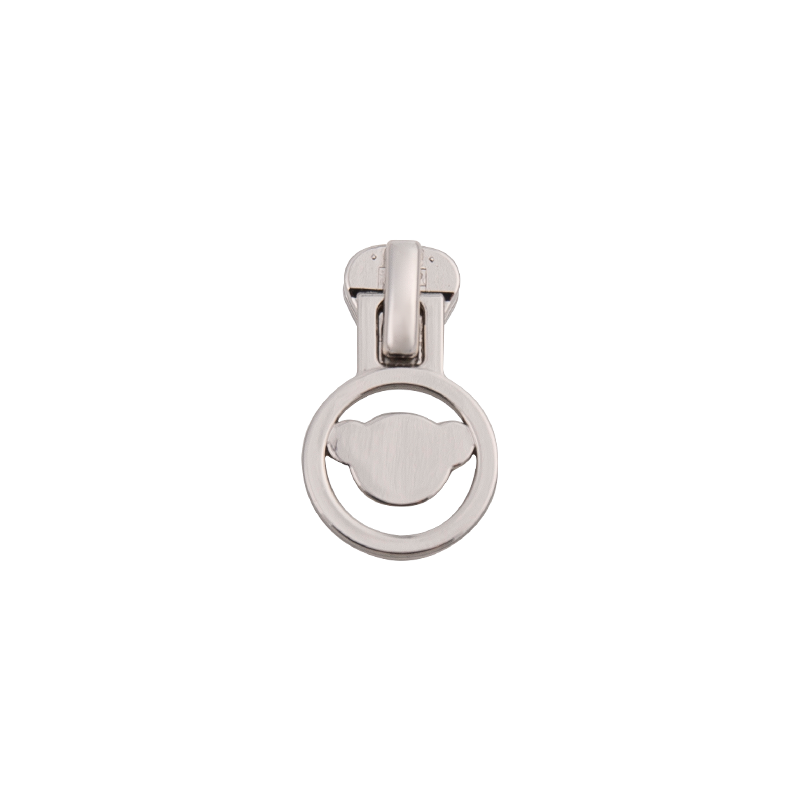
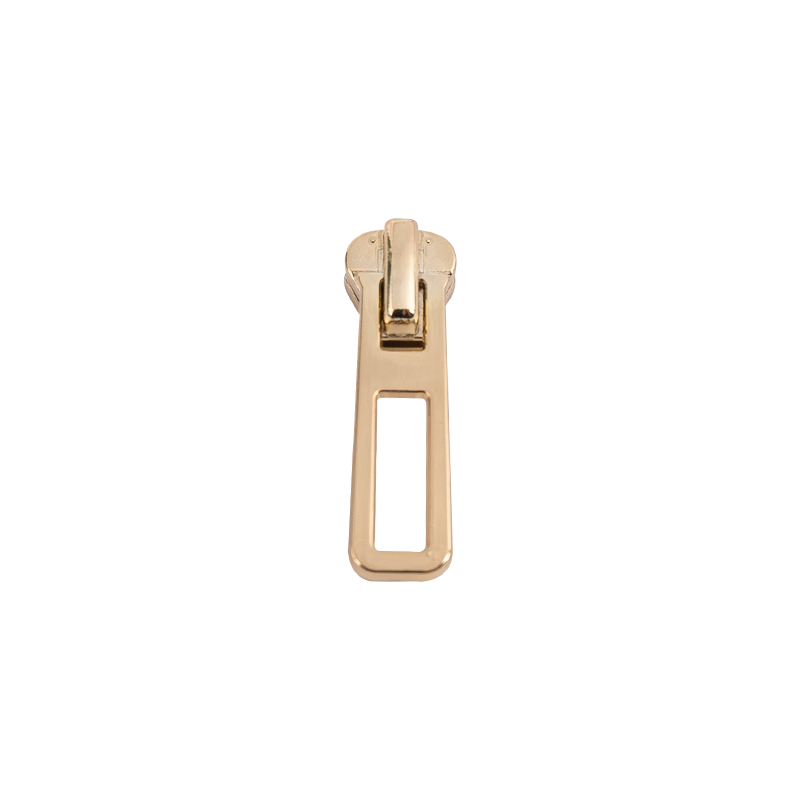
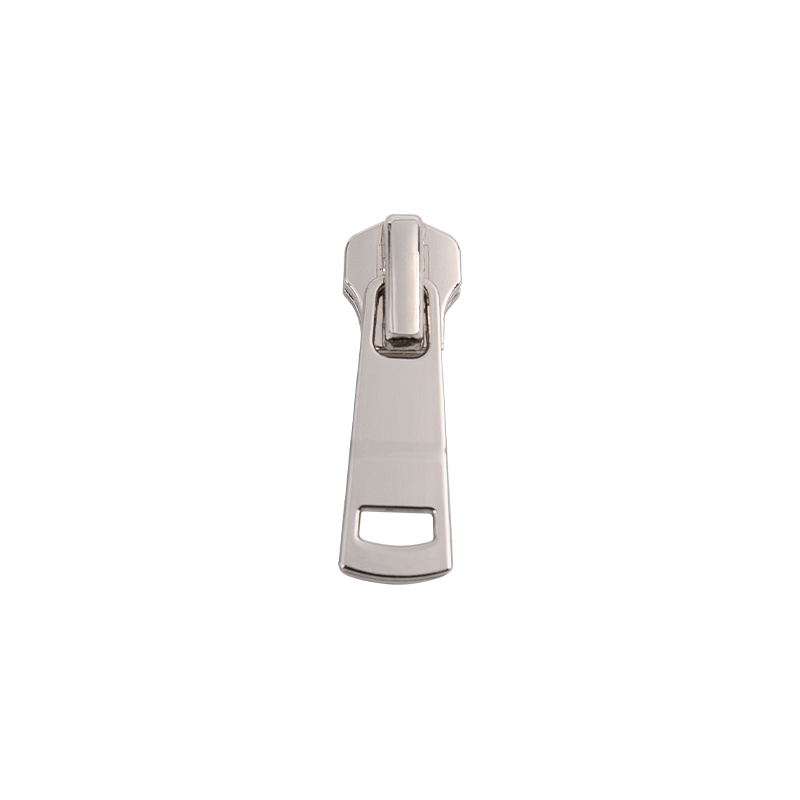
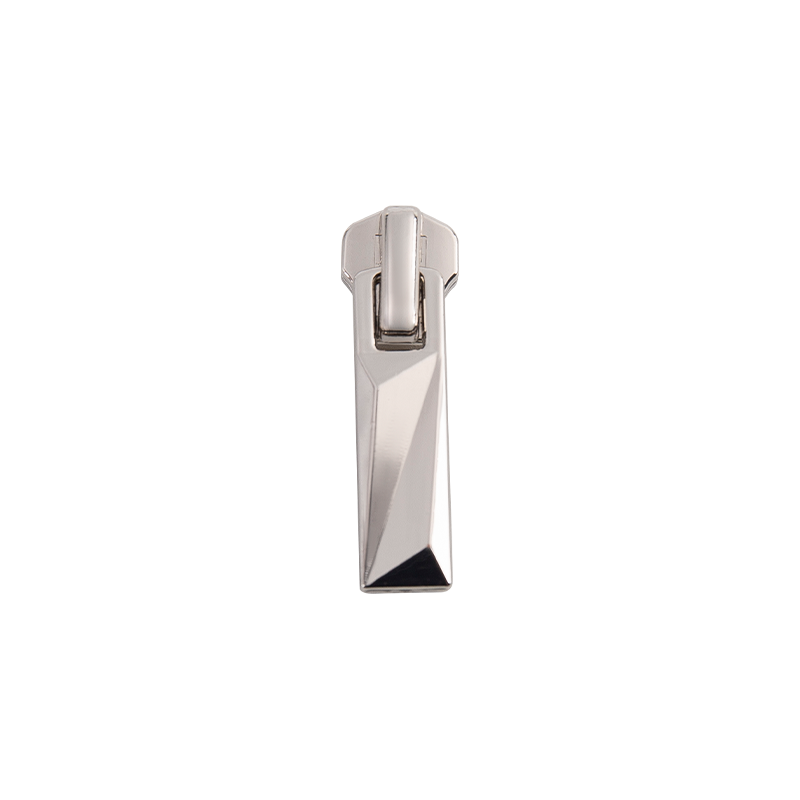
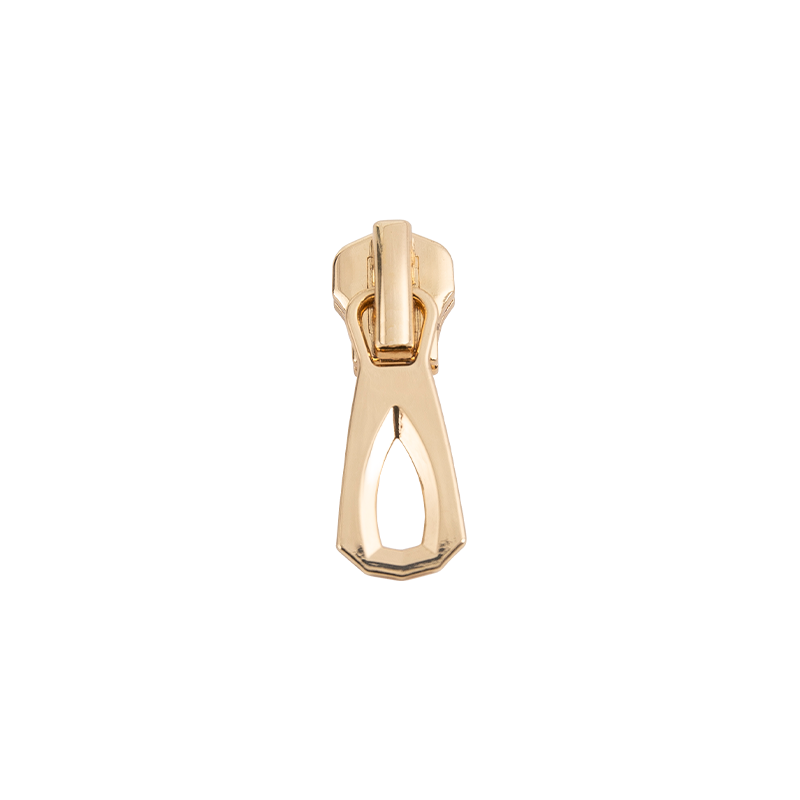
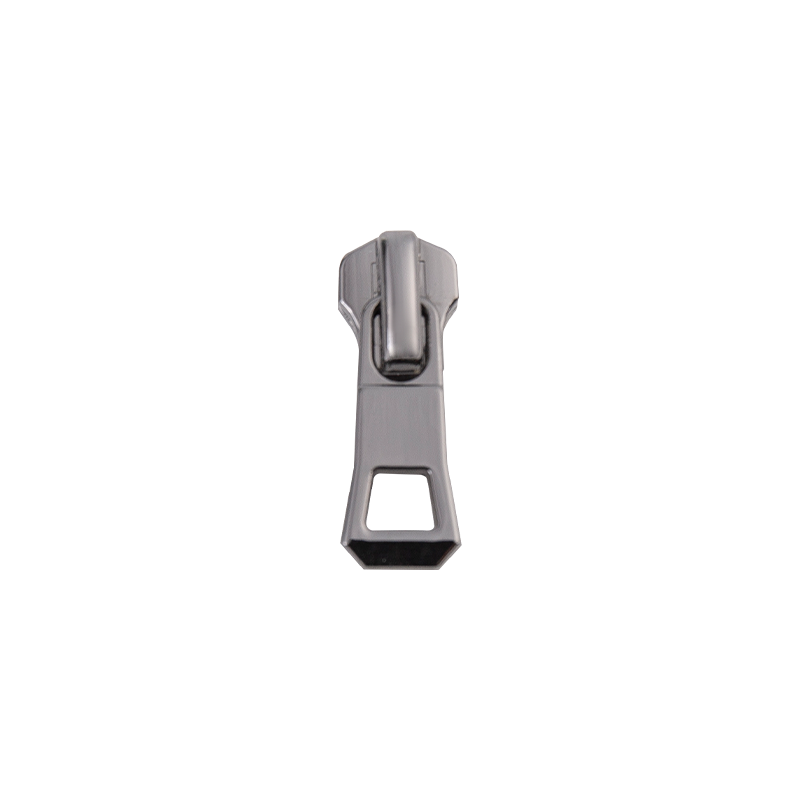
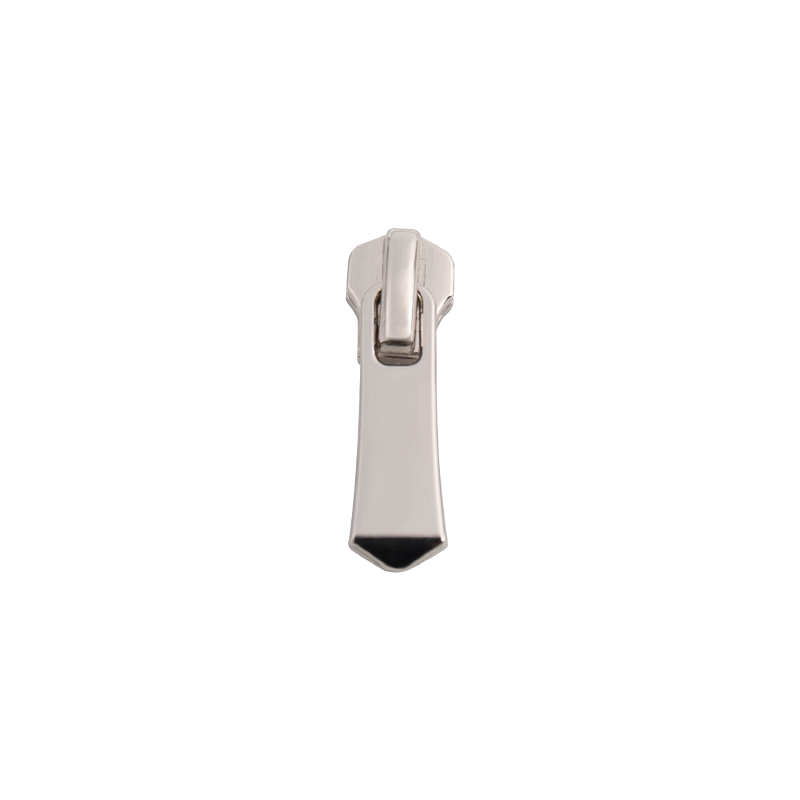
Slider bodies are manufactured in metal (brass, zinc alloy, stainless steel) or plastic, and are available in a wide range of surface finishes — antique brass, gunmetal, nickel, matte black, and more. Our metal zipper slider range covers #3, #5, and #8 sizes with round-base and square-base configurations and custom LOGO engraving available for brand-specification orders.
The Pull Tab (Puller): Function Meets Design
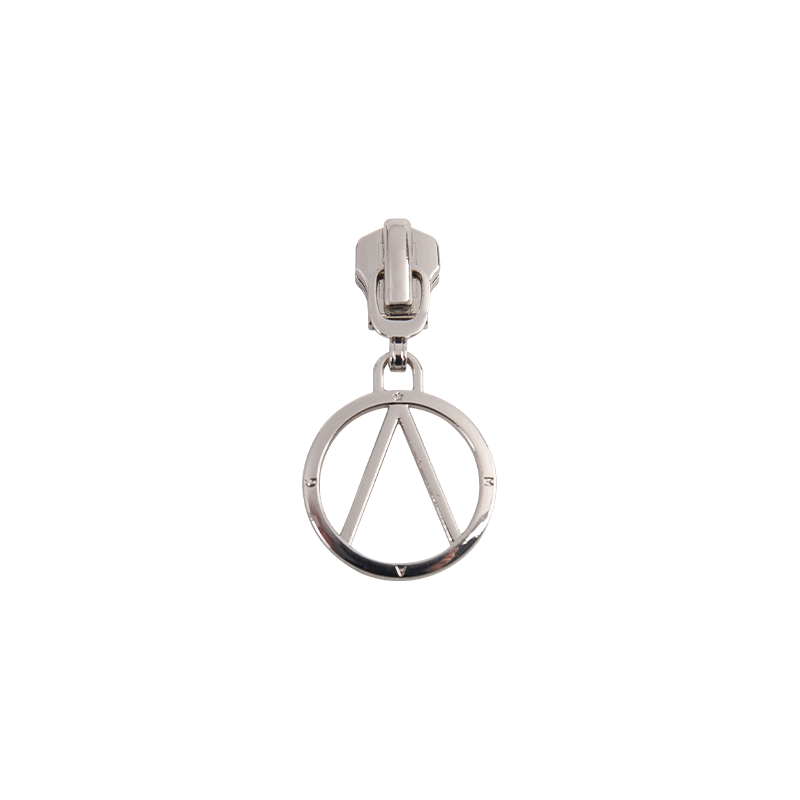
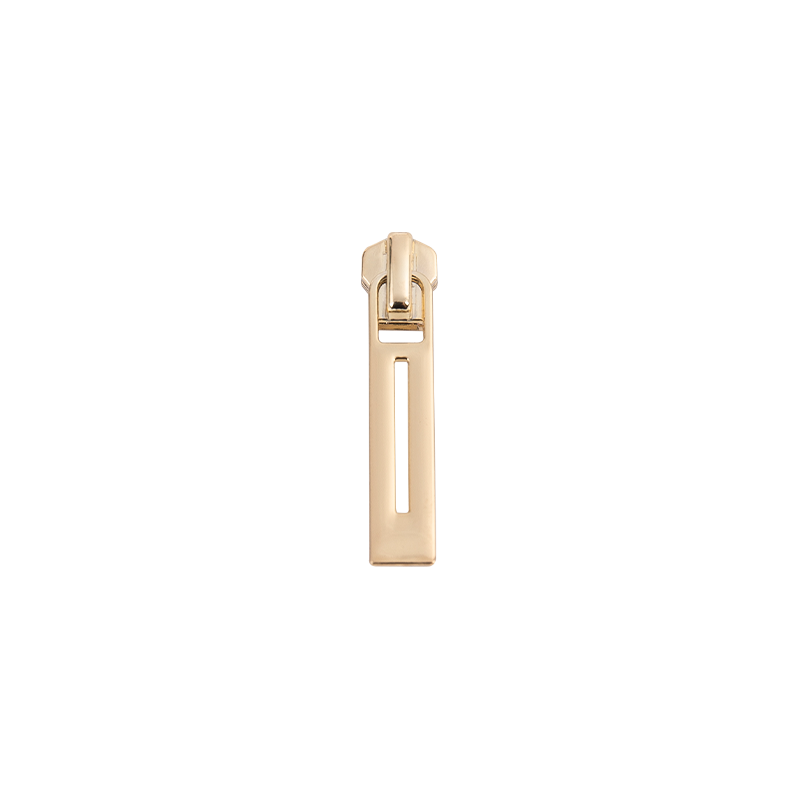
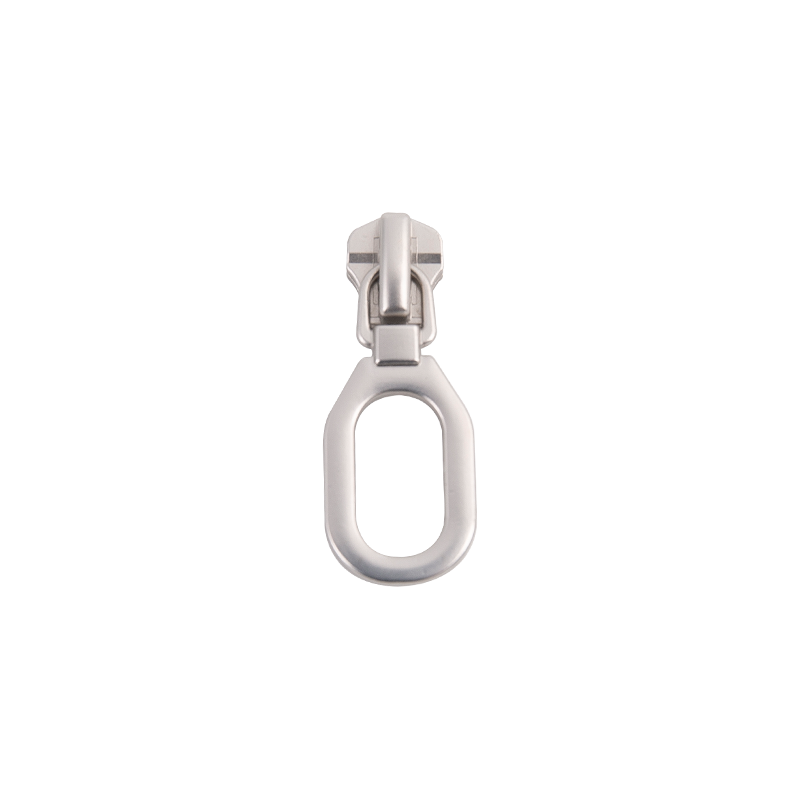
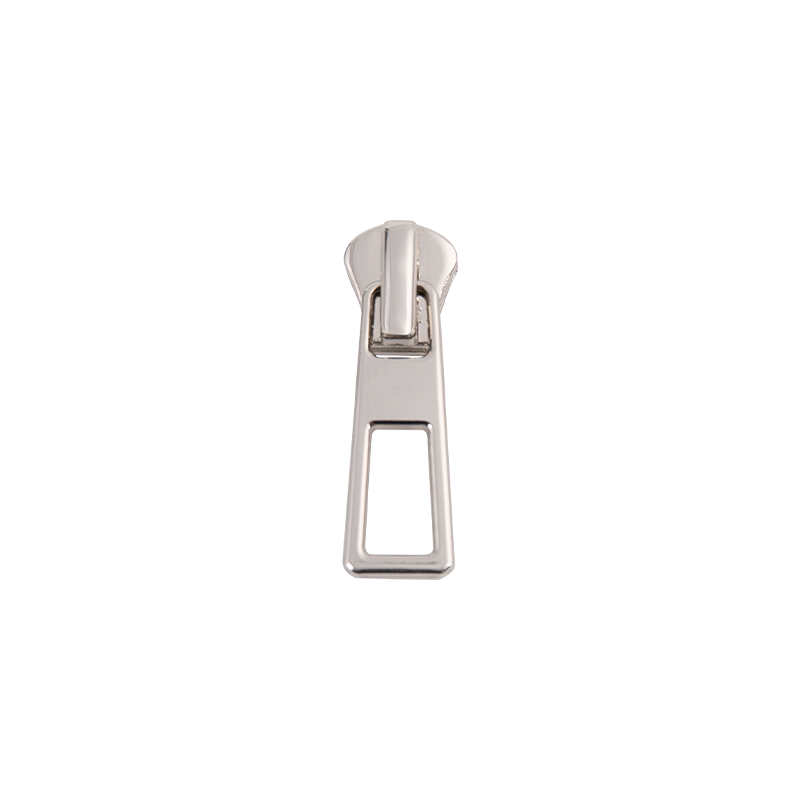
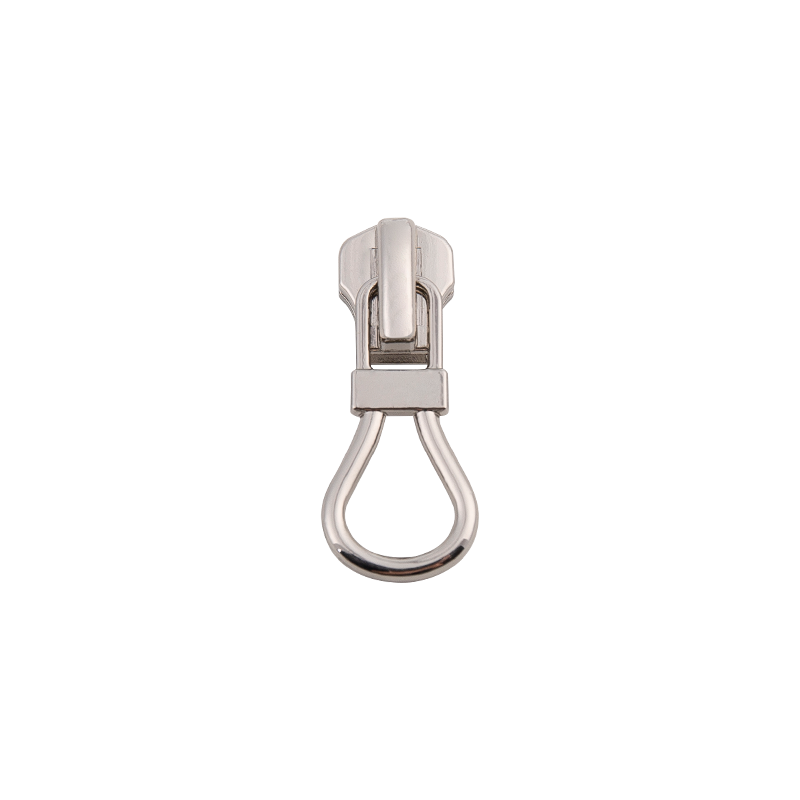
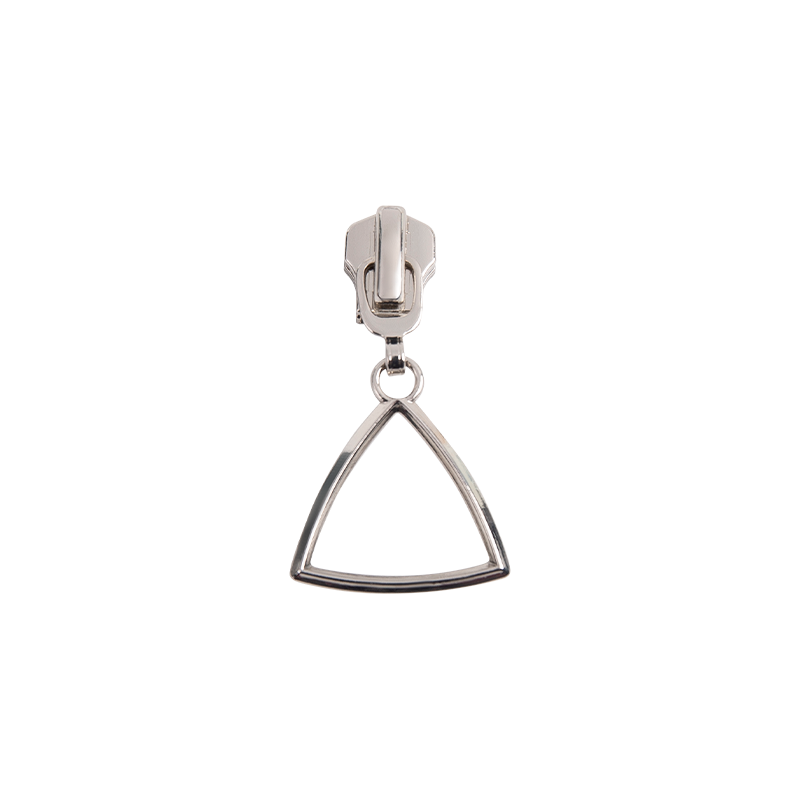
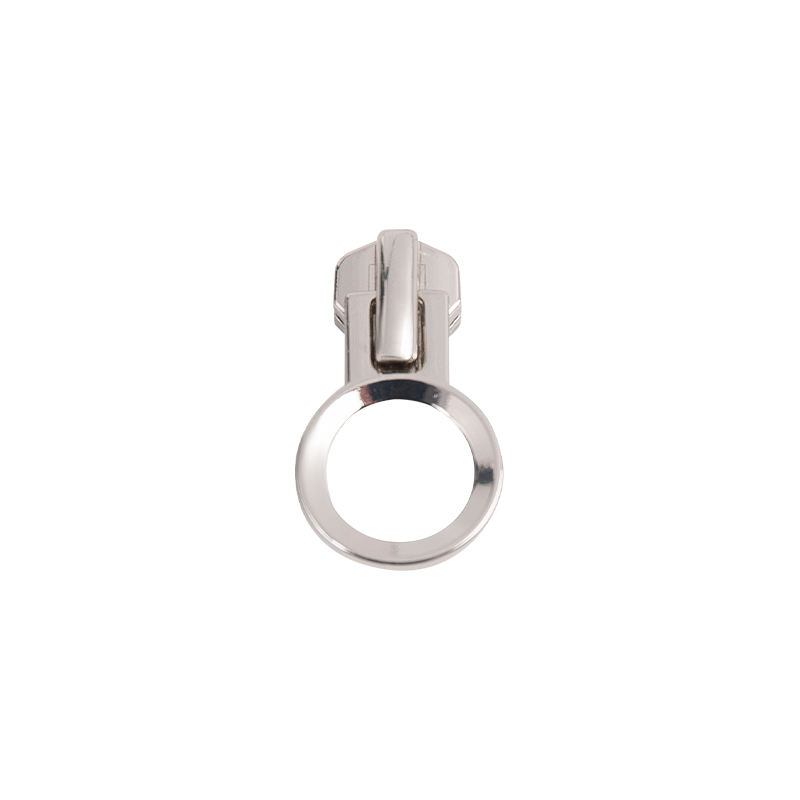
The pull tab — also called the puller — is the part attached to the slider body that the user grips to move the slider. While many people use "slider" and "pull tab" interchangeably, they are two distinct components: the slider body is the mechanical housing that engages the teeth, while the pull tab is the ergonomic or decorative attachment that provides grip and leverage.
Pull tabs range from a simple flat loop of metal — the standard for basic garment zippers — to elaborate custom shapes used as brand signatures on premium outerwear, luggage, and accessories. The pull tab is often the most visible part of the zipper and has significant influence on the perceived quality and aesthetic of the finished product.
Key puller specifications include attachment type (fixed vs. swivel), material (metal alloy, injection-molded plastic, rubber, leather), finish, and shape. For brand-specification work, custom zipper pullers with embossed or engraved logos are produced in zinc alloy or brass, typically available from minimum order quantities that suit both mid-size brands and large manufacturers.
Functionally, swivel pull tabs reduce stress on the attachment point during repeated use and are preferred for products that are opened and closed frequently. Fixed tabs are simpler and lower in cost, appropriate for items that are used less intensively.
Top Stop and Bottom Stop
Stops are small metal or plastic components crimped or molded onto the tape at the ends of the teeth. Their function is straightforward: they prevent the slider from traveling off the end of the zipper chain.
Top stops are located at the upper end of each side of the zipper tape — two stops per zipper, one on each side. They prevent the slider from pulling off the top of the teeth when the zipper is opened. On continuous zipper chain (sold by the roll without preset stops), top stops must be added manually after the chain is cut to length.
Bottom stops are used on non-separating (closed-end) zippers and are positioned at the lower end of the teeth to prevent the slider from exiting at the bottom. On most finished non-separating zippers, the bottom stop is a single metal bracket resembling a thick staple, crimped across both sides of the chain simultaneously.
Unlike teeth, stops are generally replaceable without replacing the entire zipper. A pair of needle-nose pliers is usually sufficient to remove a damaged stop and crimp a new one in place — making stop replacement one of the most accessible zipper repairs available.
Insertion Pin and Retainer Box (Separating Zippers Only)
Separating zippers — used on jackets, coats, vests, and any garment that needs to open completely at the bottom — replace the bottom stop with a two-part mechanism that allows the two sides of the zipper to detach entirely from each other.
The insertion pin is a rigid metal or plastic pin fixed to the bottom of the teeth on one side of the tape. To close a separating zipper, the user inserts this pin through the bottom of the slider and into the retainer box on the opposite side, then pulls the slider upward to engage the teeth.
The retainer box (also called the starter box) is fixed to the opposite side of the tape. It has a precisely sized opening that accepts the insertion pin and holds it in alignment while the slider begins its upward travel. The retainer box must be positioned at exactly the same height as the pin for the mechanism to function correctly — misalignment is a common cause of separating zipper malfunction in garment manufacturing.
There is only one insertion pin and one retainer box per separating zipper. On two-way separating zippers, an additional slider and associated hardware are added to allow the zipper to open from both ends — a configuration used on long coats, sleeping bags, and large equipment covers.
How to Choose the Right Zipper Parts for Your Product
Selecting zipper components is a matching exercise: teeth size, slider type, tape material, and stop configuration must all be compatible with each other and appropriate for the product's end use. The table below provides a practical starting point for common product categories:
| Product Type | Recommended Teeth | Slider Type | Key Considerations |
|---|---|---|---|
| Lightweight apparel (shirts, dresses) | #3 coil (nylon) | Auto-lock or non-lock | Low weight, smooth operation, invisible zipper option |
| Outerwear (jackets, coats) | #5 coil or molded plastic | Auto-lock, separating | Full separation at bottom; insertion pin + retainer box required |
| Denim jeans / workwear | #5 metal (brass) | Pin-lock (flatlock) | High durability, resistance to repeated industrial laundering |
| Bags and luggage | #5 or #8 coil or molded plastic | Non-lock, double-pull option | Smooth, frequent operation; corrosion resistance for travel use |
| Leather goods / luxury accessories | #3 or #5 metal (brass or nickel) | Auto-lock, custom puller | Premium finish; custom logo puller for brand identity |
| Outdoor / technical gear | #8 or #10 coil | Non-lock or auto-lock | Waterproof tape; corrosion-resistant hardware; large pull tab for gloved use |
| Industrial / tent / covers | #10 coil, separating or two-way | Non-lock, heavy-duty body | UV-resistant tape; maximum chain strength; long continuous runs |
For B2B buyers sourcing zipper components at volume, specifying each part individually — rather than ordering finished zippers — provides greater flexibility in lead times, color matching, and cost management. Haining Feng Yang Zipper Technology supplies zipper sliders, pull tabs, zipper chain, pins, boxes, and finished zippers across all major size and material categories, with OEM customization available for sliders and pullers. Contact our team to discuss specifications and minimum order quantities for your next production run.