 en
en  русский
 한국어
한국어 get a free quote

Content
What Is a Zipper Chain and How Does It Work?
A zipper chain — also called zipper tape with teeth, continuous zipper chain, or zipper by the yard — is the core functional component of any zipper fastener. It consists of two parallel fabric tapes, each carrying a row of interlocking elements (teeth or coils), sold as a continuous length before sliders and end stops are applied. The chain is the foundation from which finished zippers of any length are cut and assembled.
The interlocking mechanism relies on precisely engineered tooth geometry. Each element has a head with a hook-and-hollow profile: when the slider passes over the two rows, it forces the hooks of opposing teeth into each other's hollows under controlled lateral pressure, creating a secure mechanical interlock that withstands tensile loads of 15–150N depending on chain size and material. Pulling the slider in the reverse direction levers the teeth apart sequentially without damaging the elements.
Zipper chains are manufactured in two fundamental element configurations:
- Coil (Spiral) Chain: A continuous monofilament coil — typically nylon or polyester — is stitched or woven directly into the tape. Lightweight, flexible, and the most widely produced chain type globally. Used in apparel, luggage, and sportswear.
- Toothed (Vislon or Metal) Chain: Individual discrete elements — molded plastic (Vislon) or stamped metal — are clamped or injection-molded onto the tape at regular intervals. Heavier duty, higher strength, and typically used in outerwear, bags, upholstery, and industrial applications.
Types of Zipper Chain by Material
Material selection determines a zipper chain's strength, weight, corrosion resistance, flexibility, and cost. The three dominant material categories each serve distinct end-use segments.
Nylon Coil Chain
Nylon coil chain accounts for the majority of global zipper production by volume. Its monofilament spiral construction gives it exceptional flexibility — it can bend in multiple directions without breaking — making it the standard choice for curved seams in sportswear, sleeping bags, and tents. Nylon chain is also dye-receptive, enabling precise color matching to fabric. Standard sizes range from #3 to #10, referring to the approximate width of the closed chain in millimeters. Heat resistance is limited to approximately 120°C, which constrains use in high-temperature applications.
Polyester Coil Chain
Polyester coil chain is structurally similar to nylon but offers superior UV resistance and lower moisture absorption — two properties critical for outdoor and marine applications. It is the preferred specification for sail covers, awnings, convertible car tops, and outdoor furniture cushion enclosures. Polyester chain also exhibits lower stretch under load compared to nylon, making it better suited for applications requiring dimensional stability under sustained tension.
Metal Chain (Brass, Aluminum, Nickel)
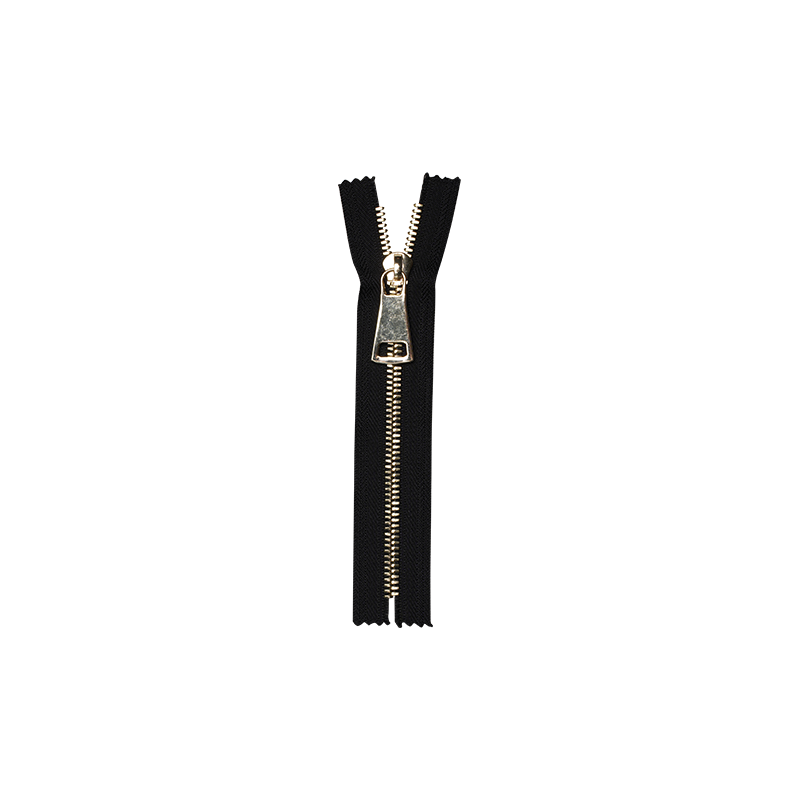
Metal zipper chain uses individual teeth stamped from brass, zinc alloy, or aluminum and clamped onto woven tape at uniform pitch. Brass chain dominates the premium denim, leather goods, and workwear markets due to its combination of strength, durability, and the warm metallic aesthetic associated with quality construction. Aluminum chain is lighter and corrosion-resistant, frequently specified for aerospace, military, and outdoor gear where weight is a design constraint. Nickel-plated brass offers a silver finish at lower cost than solid nickel or stainless steel alternatives.
Plastic (Vislon) Chain
Vislon chain uses injection-molded polyacetal (POM) or nylon teeth clamped onto tape at discrete intervals, creating a toothed profile that is visually similar to metal chain but significantly lighter. It offers excellent resistance to corrosion and salt water, making it the chain type of choice for marine upholstery, wetsuits, and protective gear. Vislon chain is also impact-resistant — individual teeth can absorb lateral impact without shattering, unlike brittle metal alternatives at low temperatures.

Zipper Chain Size Standards and Specifications
Zipper chain sizing follows a globally recognized numbering system based on the closed chain width in millimeters. Understanding this system is essential for specifying the correct chain for a given application and ensuring slider compatibility.
| Chain Size | Closed Width (mm) | Typical Pull Force (N) | Common Applications |
|---|---|---|---|
| #3 | ~3mm | 15–25N | Dresses, lingerie, cosmetic bags |
| #5 | ~5mm | 40–60N | Jackets, jeans, handbags, luggage |
| #7 | ~7mm | 70–90N | Backpacks, outerwear, sport bags |
| #10 | ~10mm | 100–150N | Heavy bags, tents, upholstery, industrial covers |
Beyond size, buyers must specify tape width, tape material (woven polyester or cotton), tooth pitch, and chain color. Tape width typically ranges from 14mm to 32mm depending on chain size; wider tapes distribute seam stress over a larger area and are preferred in high-tension applications. Tooth pitch — the center-to-center distance between adjacent elements — determines both the fineness of engagement and the number of interlocks per unit length, directly affecting chain strength and smooth operation.
Specialty Zipper Chains for Technical and Industrial Applications
Beyond standard apparel and luggage chains, a growing segment of the market involves engineered zipper chains designed for performance-critical environments. These specialty products are specified by engineers and procurement managers rather than fashion designers, and carry substantially different quality and testing requirements.
Waterproof Zipper Chain
Waterproof chains use either a thermoplastic polyurethane (TPU) coating bonded to the tape surface or a fully molded TPU element construction that seals around the interlocked teeth. IP67-rated waterproof zippers can withstand submersion to 1 meter for 30 minutes — a requirement for drysuits, waterproof bags, and outdoor protective enclosures. The tape itself is typically a non-woven laminate rather than woven fabric, eliminating the wicking pathways that allow moisture ingress along yarn interstices.
Fire-Retardant Zipper Chain
Protective workwear for firefighters, military personnel, and industrial workers requires zipper chains that meet flame resistance standards such as NFPA 2112, EN ISO 11612, or MIL-SPEC requirements. These chains use inherently flame-resistant tape materials (Nomex, Kevlar blends, or FR-treated polyester) combined with metal or high-temperature polymer teeth. The critical performance parameter is the chain's ability to remain functional after direct flame exposure — failure of a zipper on protective clothing in an emergency represents a serious safety hazard.
Antistatic and Conductive Zipper Chain
Electronics manufacturing cleanrooms, explosive-atmosphere workwear, and ESD-sensitive equipment enclosures require zipper chains with controlled surface resistivity. Antistatic chains incorporate carbon-loaded fibers into the tape weave or apply conductive coatings to the teeth, achieving surface resistivity values in the 10⁵–10⁹ Ω range specified by IEC 61340 and EN 1149 standards.
High-Strength Structural Chain
Military dry bags, life raft covers, and heavy equipment protective cases specify zipper chains tested to tensile loads of 500N and above. These chains use thicker tape substrates (reinforced with aramid or high-tenacity polyester yarns), oversized metal teeth at reduced pitch, and double-stitched tape attachment. Pull-off force (the load required to separate the tape from the chain structure) is the critical failure mode in high-load applications, and is tested per ISO 2062 or ASTM D2256 protocols.
Sourcing Zipper Chain: Key Considerations for Buyers
The global zipper chain market is dominated by a small number of large integrated manufacturers — most notably YKK (Japan), SBS (China), and Riri (Switzerland/Italy) — alongside a large base of Chinese and Taiwanese mid-tier suppliers. Understanding the supply landscape and key procurement variables helps buyers avoid common quality pitfalls.
Continuous Chain vs. Finished Zipper
Buying zipper chain by the roll (typically 200–500m per roll) rather than as pre-cut finished zippers offers significant cost advantages for manufacturers cutting to custom lengths. However, it requires in-house or contracted slider insertion, end-stop attachment, and quality inspection capabilities. For high-volume apparel producers with automated finishing lines, continuous chain procurement is standard practice.
Color Consistency and Lot Management
Dye lot variation between production batches is a chronic challenge when sourcing zipper chain from lower-tier suppliers. Color deviation of more than 0.5 ΔE (CIELAB) is typically visible to the naked eye and will cause garment rejection in quality-conscious markets. Premium suppliers provide spectrophotometric measurement reports per lot and maintain batch traceability systems that allow buyers to match reorders to original production runs.
Chemical Compliance
Zipper chains destined for apparel sold in the EU, US, or Japanese markets must comply with restricted substance regulations including REACH (EU), CPSIA (US), and Oeko-Tex Standard 100. Key substances of concern include azo dyes, nickel in metal elements (EU Nickel Directive limits nickel release to 0.5 μg/cm²/week for items in prolonged skin contact), and formaldehyde in tape finishes. Request full chemical compliance documentation — specifically REACH SVHC declarations and Oeko-Tex or bluesign certification — before committing to a new supplier.
Operational Performance Testing
Before approving a new zipper chain source, conduct or commission the following tests against ISO 2060, ISO 5402, or ASTM equivalent standards:
- Slider pull force: Measures the force required to operate the zipper across its full length — should be consistent within ±15% across the chain run.
- Cyclic endurance test: Minimum 500–2,000 open/close cycles without element skip, derailment, or tape damage, depending on end-use category.
- Colorfastness to washing and light: ISO 105-C06 (washing) and ISO 105-B02 (light) — minimum grade 4 for most apparel applications.
- Dimensional stability after washing: Tape shrinkage in excess of 1.5% causes puckering along garment seams — a critical defect in woven or structured fabrics.